
Anúncios
Cities hold secrets in their structures—patterns invisible to the casual observer yet fundamental to understanding urban beauty. Fractal urban mapping reveals these hidden geometric wonders.
🌆 The Invisible Geometry Beneath Our Streets
Anúncios
When we walk through city streets, we rarely stop to consider the mathematical elegance embedded in urban landscapes. Yet beneath the hustle of daily life exists a remarkable phenomenon: cities exhibit fractal patterns—self-similar structures that repeat at different scales. This discovery transforms how we perceive, design, and experience urban environments.
Fractal geometry, popularized by mathematician Benoit Mandelbrot in the 1970s, describes irregular shapes found throughout nature. Coastlines, mountain ranges, tree branches, and remarkably, cities all demonstrate fractal characteristics. Unlike Euclidean geometry with its clean lines and perfect circles, fractal geometry captures the organic complexity of real-world forms.
Anúncios
Urban planners, architects, and geographers increasingly recognize that fractal analysis offers powerful insights into city organization. By examining how street networks, building distributions, and green spaces replicate patterns across scales, we unlock new perspectives on urban functionality, beauty, and sustainability.
Understanding Fractals in Urban Contexts
A fractal exhibits self-similarity—zoom in on a portion, and you’ll find patterns resembling the whole. Consider a fern leaf: each small leaflet mirrors the structure of the entire frond. Cities display similar recursive patterns, though less perfectly than mathematical fractals.
The fractal dimension measures complexity. A perfectly straight line has dimension 1, while a plane has dimension 2. Fractals occupy dimensions between these integers. A city street network might have a fractal dimension of 1.7, indicating complexity beyond a simple line yet not filling space completely like a plane.
This mathematical property directly correlates with urban characteristics. Higher fractal dimensions typically indicate denser, more interconnected street networks with greater accessibility. Lower dimensions suggest more dispersed, automobile-dependent developments with limited connectivity.
Natural Growth Versus Planned Design
Organically grown medieval cities often exhibit higher fractal dimensions than modern planned developments. Ancient Rome, medieval Paris, and old Delhi developed through centuries of incremental additions, creating intricate networks with remarkable self-similarity. Modern grid-based cities like Manhattan demonstrate lower fractal complexity but higher geometric order.
Neither approach is inherently superior. Fractal analysis simply reveals different organizational philosophies and their functional consequences. Medieval street patterns encourage pedestrian exploration and create distinctive neighborhood identities. Grid systems facilitate navigation and efficient transportation networks.
🗺️ Mapping Techniques That Reveal Hidden Patterns
Fractal urban mapping employs sophisticated computational methods to analyze city structures. Geographic Information Systems (GIS) software processes spatial data, calculating fractal dimensions for street networks, building footprints, and land use patterns.
The box-counting method represents one common approach. Researchers overlay progressively finer grids on urban maps, counting boxes containing city features at each scale. The relationship between box size and count reveals the fractal dimension.
Radius-based methods examine how urban density changes with distance from central points. Fractal cities show consistent density relationships across scales—neighborhoods replicate broader city patterns.
Technology Enabling New Discoveries
Remote sensing technology and satellite imagery provide unprecedented data for fractal analysis. High-resolution images capture urban details from rooftops to sidewalks. Machine learning algorithms identify patterns invisible to human observers.
Open-source mapping platforms democratize fractal urban analysis. Researchers worldwide access standardized datasets, enabling comparative studies across cultures and continents. OpenStreetMap provides detailed street networks for thousands of cities, facilitating large-scale fractal research.

The Aesthetic Dimension of Fractal Cities ✨
Fractal patterns resonate with human perception in profound ways. Research suggests our brains find moderate fractal complexity inherently pleasing—neither too simple nor overwhelmingly chaotic. This preference explains why organic urban environments often feel more engaging than monotonous suburban developments.
Historic city centers captivate visitors precisely because of their fractal qualities. Winding streets reveal new vistas at every turn. Building facades display intricate details that reward closer inspection. Public spaces nest within larger districts, creating hierarchies of intimate and grand experiences.
Architectural theorist Nikos Salingaros argues that successful urban environments require fractal scaling across multiple levels. A beautiful city needs detail at the human scale (doorways, windows, textures), mid-range features (building compositions, street furniture), and large-scale organization (neighborhood layouts, skyline variations).
Biophilic Design Connections
Fractal urban patterns align naturally with biophilic design principles—approaches that integrate nature into built environments. Since natural systems exhibit fractal properties, cities incorporating these patterns feel more organic and restorative.
Green infrastructure demonstrates this connection beautifully. Parks branching into greenways that extend to neighborhood gardens create fractal networks of natural spaces. These systems provide ecological benefits—stormwater management, wildlife corridors, air quality improvement—while satisfying aesthetic and psychological needs.
Practical Applications for Urban Planning
Fractal analysis offers practical tools for contemporary urban challenges. Transportation planners use fractal dimensions to assess street network efficiency. Higher dimensions indicate better connectivity, reducing travel distances and supporting walkability.
Zoning decisions benefit from fractal perspectives. Mixed-use developments with varied building scales create richer fractal patterns than single-use zones. This diversity supports vibrant street life and economic resilience.
Infrastructure planning increasingly considers fractal distribution patterns. Utility networks, emergency services, and public amenities function most efficiently when their spatial organization matches underlying urban fractal structures.
Case Studies in Fractal-Informed Development
Barcelona’s superblock initiative demonstrates fractal thinking in practice. The city creates pedestrian-priority zones within its famous grid, adding complexity at neighborhood scales while maintaining broader order. This multi-scale approach balances accessibility with livability.
Portland, Oregon employs fractal principles in its urban growth boundary policies. The city encourages dense development near transit corridors while preserving green spaces that penetrate the urban fabric at multiple scales—large regional parks, district greenways, and pocket gardens.
Singapore integrates fractal concepts into its “City in a Garden” vision. Vegetation networks extend from nature reserves through park connectors to rooftop gardens, creating ecological continuity across scales.
🔍 Revealing Inequality Through Fractal Lens
Fractal mapping exposes disparities in urban access and quality. Affluent neighborhoods often display higher fractal dimensions—more street connections, varied building types, abundant amenities. Disadvantaged areas frequently show lower complexity and fewer options.
This spatial analysis quantifies environmental justice issues. Food deserts, transit gaps, and green space deficits become measurable through fractal metrics. Such data supports evidence-based interventions targeting underserved communities.
However, complexity alone doesn’t guarantee equity. Gentrification can increase neighborhood fractal dimensions while displacing existing residents. Planners must couple spatial analysis with social considerations, ensuring beauty and functionality benefit all inhabitants.
The Future of Fractal Urban Design
Emerging technologies promise to revolutionize fractal urban planning. Artificial intelligence can simulate development scenarios, predicting how proposed changes affect city-wide fractal patterns. Virtual reality allows citizens to experience these futures before construction begins.
Parametric design tools enable architects to create buildings that contribute positively to urban fractal landscapes. Software generates facades with appropriate detail levels, ensuring new construction harmonizes with existing patterns rather than disrupting them.
Climate adaptation strategies increasingly incorporate fractal principles. Resilient cities need redundant systems distributed across scales—from individual building features through neighborhood infrastructure to regional networks. This fractal redundancy ensures failure at one level doesn’t cascade catastrophically.
Challenges and Considerations ⚠️
Fractal analysis shouldn’t become prescriptive dogma. Cities serve diverse functions requiring varied spatial organizations. Industrial districts, transportation hubs, and ceremonial spaces may appropriately display lower fractal complexity than residential neighborhoods.
Cultural context matters profoundly. Fractal patterns reflecting one society’s values may feel alien elsewhere. Islamic cities traditionally emphasize inward-focused courtyards creating specific fractal characteristics distinct from European plaza-centered designs.
Economic constraints limit fractal optimization in practice. Developers face financial pressures favoring repetitive, efficient construction over varied complexity. Public policy must balance market forces with long-term urban quality goals.
Experiencing Your City Through Fractal Eyes 👁️
You don’t need mathematical expertise to appreciate fractal urban beauty. Simply notice patterns at different scales during your next walk. Observe how neighborhood layouts echo city-wide structures. Notice building details mirroring architectural compositions.
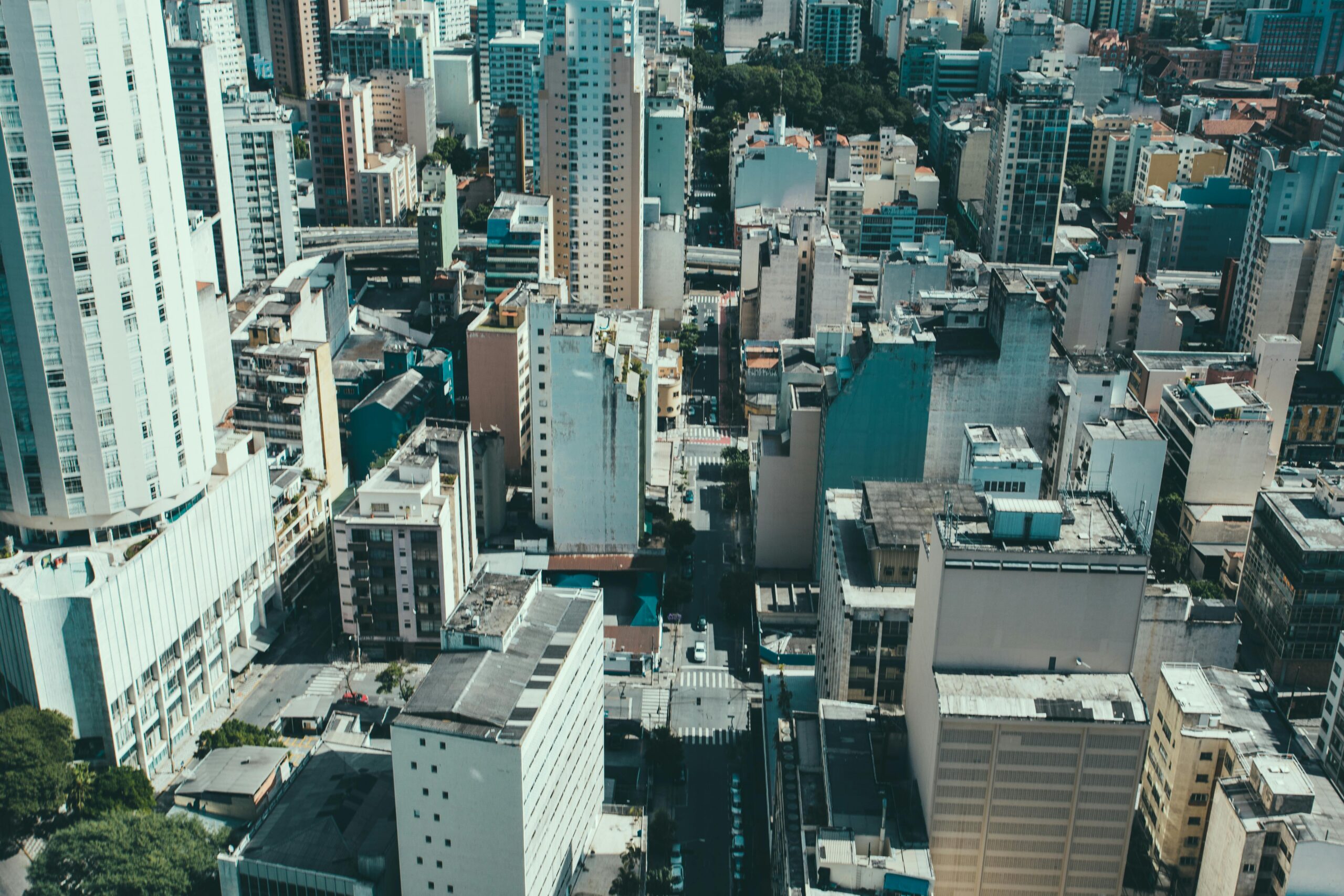
Photography beautifully captures fractal urban patterns. Aerial shots reveal large-scale organizations. Street-level images showcase human-scale details. Comparing these perspectives illuminates self-similarity across scales.
Sketching encourages deeper observation. Draw your neighborhood’s street network, then zoom in on a single block, noting how smaller paths and passages replicate larger patterns. This exercise trains your eye to recognize fractal characteristics.
Bridging Science and Lived Experience
Fractal urban mapping represents more than academic exercise—it reconnects us with fundamental patterns governing beautiful, functional places. By understanding these hidden geometries, we become better stewards of our cities.
This knowledge empowers advocacy. When development proposals threaten neighborhood character, fractal analysis provides objective evidence of impacts. Communities can articulate concerns beyond subjective preferences, demonstrating how changes disrupt established patterns.
Ultimately, fractal perspectives remind us that cities are living systems, not static artifacts. Like organisms, they grow, adapt, and evolve through countless small decisions. Recognizing underlying patterns helps us make choices supporting healthy urban development.
🌍 Global Patterns, Local Expressions
Fractal analysis reveals universal urban principles while honoring local distinctiveness. Cities worldwide exhibit fractal properties, yet each manifests unique patterns reflecting geography, history, and culture.
Tokyo’s fractal complexity differs markedly from Los Angeles’s sprawl, yet both cities function according to fractal principles appropriate to their contexts. Understanding these differences enriches cross-cultural urban discourse.
International collaborations increasingly share fractal mapping techniques and findings. This knowledge exchange accelerates learning, helping cities avoid mistakes and adopt successful strategies suited to their circumstances.
Transforming How We See Urban Beauty
Fractal urban mapping doesn’t reduce cities to cold mathematics—it reveals the geometric poetry underlying beloved places. That charming neighborhood, that memorable street scene, that comfortable public square—all exhibit fractal qualities that resonate with our perceptual preferences.
This understanding transforms passive observation into active appreciation. We begin noticing why certain places feel inviting and others sterile. We recognize how detail, variety, and self-similarity create engaging environments.
As citizens, planners, and designers embrace fractal perspectives, cities can evolve toward greater beauty and functionality. We’re learning to read the hidden language of urban form, unlocking possibilities for creating places that nourish human flourishing across generations.
The fractal lens doesn’t prescribe single solutions but opens possibilities. It reminds us that beauty emerges from complexity, that order and variety can coexist, and that the most successful cities balance human needs across multiple scales. By exploring fractal urban mapping, we gain fresh eyes for the extraordinary places we call home.
