
Anúncios
Crystal structure symmetry reveals nature’s hidden geometric perfection, where atomic arrangements create breathtaking patterns that govern the physical properties of materials surrounding us every day.
🔮 The Hidden Language of Crystals
Anúncios
Beneath the surface of every mineral, gemstone, and even the salt in your kitchen lies an extraordinary world of mathematical precision. Crystal structure symmetry represents one of nature’s most elegant achievements, where atoms arrange themselves in repeating patterns that follow strict geometric rules. These arrangements aren’t random—they’re the result of fundamental forces seeking the most stable configuration possible.
When we examine crystals at the molecular level, we discover that their beauty isn’t merely aesthetic. The symmetrical patterns within crystal structures determine everything from a diamond’s hardness to a snowflake’s unique shape. Understanding these patterns opens doors to innovations in materials science, pharmaceuticals, electronics, and countless other fields that shape modern life.
Understanding the Foundation: What Makes a Crystal Structure Symmetrical?
Anúncios
At its core, crystal structure symmetry refers to the orderly, repeating arrangement of atoms, ions, or molecules in three-dimensional space. This periodicity creates what scientists call a “lattice”—an infinite framework that extends in all directions. The symmetry within this lattice determines the crystal’s classification and properties.
Unlike amorphous materials where atoms scatter randomly, crystalline substances maintain strict positional relationships. Imagine a wallpaper pattern that repeats infinitely in all directions—this two-dimensional analogy helps visualize how three-dimensional crystal lattices function. However, crystals operate under more complex rules, following specific symmetry operations that preserve the structure’s appearance.
The Seven Crystal Systems
Crystallographers categorize all possible crystal structures into seven fundamental systems based on their symmetry characteristics. Each system represents a unique combination of axis lengths and angles that define the unit cell—the smallest repeating unit of the crystal lattice.
- Cubic (Isometric): Three equal axes at 90-degree angles, like salt and diamond
- Tetragonal: Two equal axes and one different, all perpendicular, as seen in zircon
- Orthorhombic: Three unequal axes meeting at right angles, found in sulfur crystals
- Hexagonal: Three equal axes at 120 degrees plus one perpendicular, exemplified by quartz
- Trigonal (Rhombohedral): Three equal axes not at right angles, present in calcite
- Monoclinic: Three unequal axes with two at right angles, characteristic of gypsum
- Triclinic: Three unequal axes with no right angles, the least symmetrical system
💎 Symmetry Operations: Nature’s Geometric Toolkit
Crystal structures exhibit symmetry through specific operations that transform the structure while maintaining its appearance. These operations represent the fundamental ways patterns can repeat in three-dimensional space, and they’re remarkably limited—only certain combinations can fill space without gaps.
Rotation symmetry occurs when a crystal looks identical after rotating around an axis by a specific angle. Crystals can only exhibit 1-fold, 2-fold, 3-fold, 4-fold, and 6-fold rotational symmetry. Surprisingly, 5-fold symmetry cannot exist in crystals because pentagonal patterns cannot tile space completely—a mathematical constraint that nature strictly observes.
Reflection and Inversion Symmetry
Mirror planes create reflection symmetry, where one half of the structure mirrors the other across a plane. Many crystals contain multiple mirror planes intersecting at various angles, creating complex symmetrical relationships. This type of symmetry profoundly affects how crystals interact with polarized light, a property exploited in optical devices and mineralogical identification.
Inversion symmetry, or center of symmetry, means that every point in the structure has a corresponding point directly opposite through the center. This symmetry element influences whether crystals can exhibit certain physical properties, such as piezoelectricity—the ability to generate electricity under mechanical stress.
The 230 Space Groups: Cataloging All Possible Arrangements
Through mathematical analysis, crystallographers have proven that only 230 distinct ways exist to arrange repeating patterns in three-dimensional space. These “space groups” represent every possible combination of symmetry operations that can describe crystalline materials. This remarkable constraint means that every crystal structure ever discovered—and every one yet to be found—must belong to one of these 230 categories.
This finite number emerged from combining the seven crystal systems with the 32 possible point groups (combinations of rotation and reflection) and factoring in translational symmetry operations like screw axes and glide planes. The completeness of this classification system represents one of crystallography’s greatest achievements, providing a universal framework for understanding material structure.
🌟 How Symmetry Determines Physical Properties
The symmetry of a crystal’s structure isn’t merely decorative—it fundamentally determines the material’s physical, chemical, and optical properties. This relationship between structure and function enables scientists to predict how materials will behave and to design new substances with desired characteristics.
Optical properties provide striking examples of symmetry’s influence. Crystals with cubic symmetry appear optically isotropic, meaning light travels through them at the same speed regardless of direction. However, crystals with lower symmetry exhibit birefringence—splitting light into two rays traveling at different speeds. This property makes calcite useful in polarizing filters and has applications ranging from geology to telecommunications.
Mechanical and Electrical Anisotropy
Crystal symmetry also dictates mechanical properties like hardness and cleavage. Minerals often break along specific planes where atomic bonds are weakest—a direct consequence of the asymmetric arrangement of atoms. Diamond’s exceptional hardness results partly from its highly symmetrical cubic structure with strong covalent bonds in all directions.
Piezoelectric materials, which generate electrical charges under mechanical stress, must lack a center of symmetry. This structural requirement limits piezoelectricity to just 20 of the 32 point groups. Quartz crystals exploit this property in countless applications, from watches to ultrasound devices, demonstrating how symmetry constraints enable technological innovation.
Visualizing the Invisible: Modern Techniques for Studying Crystal Symmetry
For centuries, scientists could only infer crystal structure from external shape and optical properties. The discovery of X-ray diffraction in 1912 revolutionized crystallography, finally allowing direct observation of atomic arrangements. When X-rays strike a crystal, they scatter in patterns directly related to the underlying symmetry, creating diffraction patterns that reveal the structure’s secrets.
Modern X-ray crystallography can determine atomic positions with incredible precision, measuring distances to fractions of an angstrom (one ten-billionth of a meter). This technique has decoded structures ranging from simple salts to complex proteins, fundamentally advancing our understanding of materials and biological molecules.
Computational Crystallography
Today’s crystallographers combine experimental data with powerful computational methods. Software can predict crystal structures, calculate stability, and simulate how symmetry changes under different conditions. These tools accelerate materials discovery, allowing researchers to screen thousands of theoretical structures before synthesizing promising candidates in the laboratory.
Machine learning algorithms now assist in identifying symmetry patterns and classifying crystal structures from diffraction data. These artificial intelligence approaches can detect subtle symmetry relationships that might escape human observers, pushing the boundaries of crystallographic analysis.
🧬 Symmetry Breaking: When Perfection Yields to Reality
While ideal crystal structures exhibit perfect symmetry, real materials often contain defects—deviations from the perfect lattice arrangement. Point defects occur when atoms are missing, displaced, or substituted. Line defects (dislocations) and planar defects (grain boundaries) represent more extensive disruptions. Paradoxically, these “imperfections” often determine a material’s practical properties.
Controlled symmetry breaking enables remarkable technologies. Doping semiconductors—intentionally introducing asymmetric impurities—creates the p-n junctions essential to modern electronics. The colored gemstones we treasure result from trace impurities that break the perfect symmetry of otherwise colorless crystals. Ruby’s red hue comes from chromium ions replacing a small fraction of aluminum atoms in corundum’s structure.
Phase Transitions and Dynamic Symmetry
Temperature and pressure can trigger phase transitions where crystal symmetry changes dramatically. Ice exists in at least eighteen different crystalline phases, each with distinct symmetry, depending on environmental conditions. Understanding these transitions proves crucial for fields ranging from planetary science to food preservation.
Some materials undergo subtle symmetry changes at specific temperatures, transitioning between ferroelectric and paraelectric states. These transitions enable applications in sensors, actuators, and memory devices. The ability to manipulate crystal symmetry through external conditions opens vast possibilities for responsive, adaptive materials.
Natural Masterpieces: Symmetry in Minerals and Gemstones
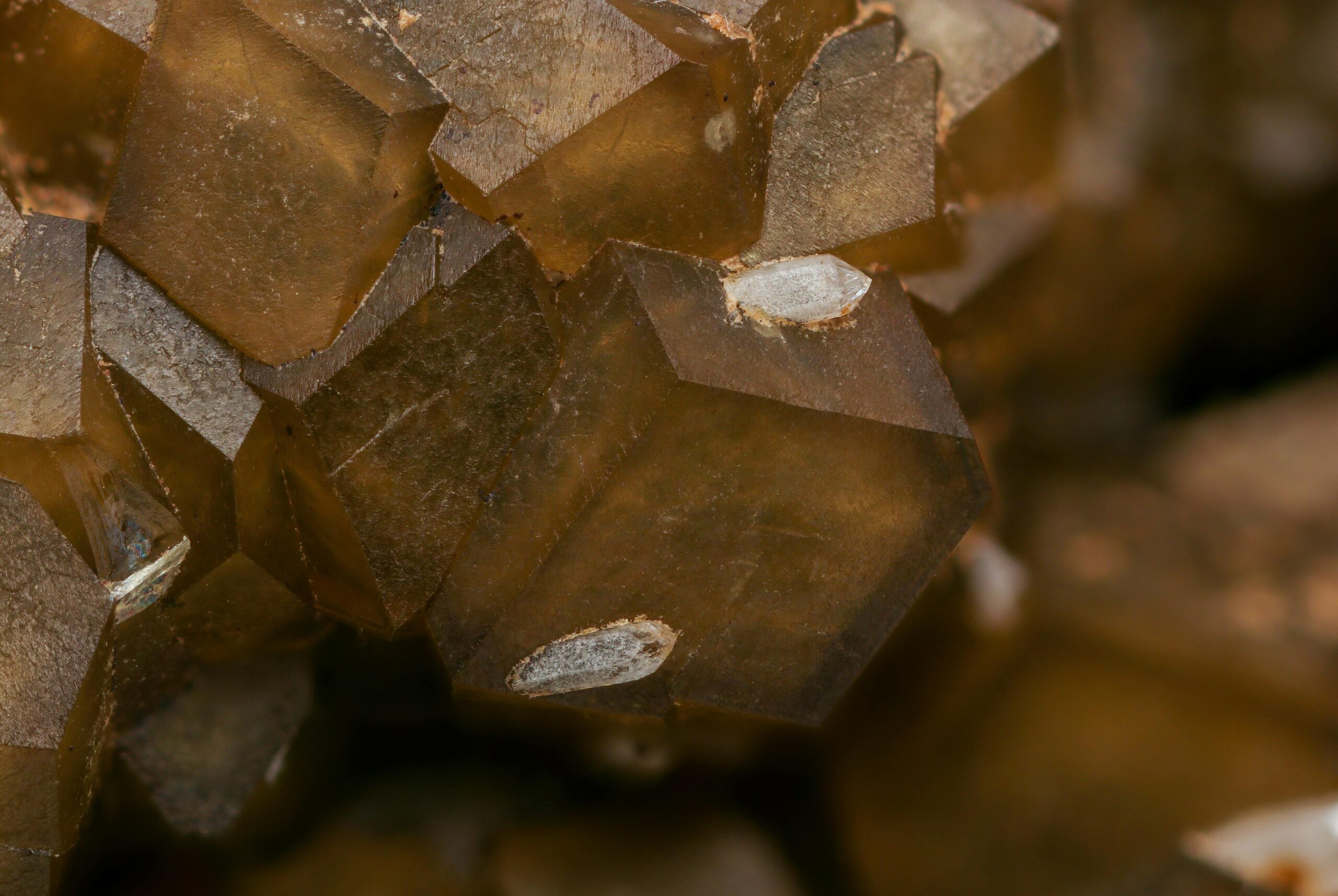
Nature’s mineral kingdom showcases crystal symmetry’s aesthetic dimension. The hexagonal prisms of quartz, the cubic form of pyrite, and the dodecahedral garnets all reflect their internal symmetry. Mineralogists traditionally used external crystal form to identify species, recognizing that outer shape mirrors inner structure.
Gemstones derive much of their beauty from how their symmetry interacts with light. A well-cut diamond exploits cubic symmetry to maximize brilliance and fire. Emerald’s hexagonal structure influences how cutters orient the stone to showcase its color and minimize visible inclusions. Understanding crystallographic orientation remains essential to the lapidary arts.
Snowflakes: Ephemeral Symmetry
Few natural phenomena demonstrate crystal symmetry more beautifully than snowflakes. Each develops within ice’s hexagonal crystal system, explaining the characteristic six-fold symmetry. The specific conditions during formation—temperature, humidity, and the crystal’s path through the clouds—determine the intricate details, ensuring that while all snowflakes share hexagonal symmetry, each exhibits unique elaborations on this theme.
The famous statement that “no two snowflakes are alike” refers to these details rather than fundamental symmetry. The underlying hexagonal lattice remains constant, demonstrating how crystal symmetry provides the framework within which infinite variation occurs.
⚗️ Applications in Pharmaceuticals and Drug Design
Crystal structure symmetry profoundly impacts pharmaceutical science. Many drug molecules can crystallize in different arrangements called polymorphs—same chemical composition, different crystal structure and symmetry. These polymorphs can exhibit dramatically different properties, including solubility, stability, and bioavailability.
The pharmaceutical industry must rigorously control which polymorph they produce, as different forms of the same drug may have different therapeutic effects. Aspirin exists in multiple polymorphic forms, though only one is commercially used. Understanding the symmetry and stability of various crystal forms prevents costly manufacturing problems and ensures consistent medication effectiveness.
Protein Crystallography
Determining protein structures through crystallography has revolutionized medicine and biology. Though proteins are biological molecules, they can be coaxed to form crystals that follow symmetry principles. X-ray crystallography of protein crystals has revealed the structures of enzymes, antibodies, and viral components, enabling rational drug design where medications are engineered to fit precisely with target molecules.
The COVID-19 pandemic highlighted protein crystallography’s importance when researchers rapidly determined the spike protein’s structure, accelerating vaccine and therapeutic development. This achievement relied on understanding how biological molecules pack into crystalline arrangements with analyzable symmetry.
🔬 Crystal Engineering: Designing Symmetry for Purpose
Modern materials scientists don’t merely discover crystal structures—they design them. Crystal engineering applies symmetry principles to create materials with predetermined properties. By selecting molecular building blocks with specific shapes and bonding preferences, researchers can predict and control the resulting crystal structure’s symmetry.
Metal-organic frameworks (MOFs) exemplify this approach. These porous crystalline materials combine metal ions with organic linkers to create structures with enormous internal surface areas. By manipulating the symmetry and size of the building blocks, scientists can design MOFs for specific applications like gas storage, catalysis, or drug delivery. Some MOFs have internal surface areas exceeding a football field per gram of material.
Two-Dimensional Materials and Reduced Symmetry
The discovery of graphene—a single layer of carbon atoms arranged in hexagonal symmetry—opened new frontiers in crystal engineering. These two-dimensional materials exhibit unique properties arising from their reduced dimensionality and specific symmetry. Researchers now create entire families of 2D materials, each with distinctive symmetry-determined electronic, optical, and mechanical characteristics.
Stacking different 2D materials in specific orientations creates “van der Waals heterostructures” with emergent properties impossible in any single component. The symmetry relationships between layers—including intentional misalignment to create “moiré patterns”—enables unprecedented control over material properties.
Symmetry’s Role in Quantum Materials and Future Technologies
Quantum materials—substances where quantum mechanical effects dominate behavior—often exhibit exotic phenomena tied to crystal symmetry. Topological insulators, for instance, conduct electricity only on their surfaces, with this unusual property protected by specific symmetry characteristics. Breaking certain symmetries eliminates the topological protection, while maintaining others preserves it.
Superconductors, which conduct electricity without resistance below critical temperatures, also depend intimately on crystal symmetry. The pairing mechanism that creates the superconducting state often reflects the underlying lattice symmetry. High-temperature superconductors typically crystallize in layered structures with reduced symmetry compared to conventional superconductors, and understanding this relationship remains an active research frontier.
✨ The Continuing Discovery of Nature’s Geometric Secrets
Despite crystallography’s maturity as a science, surprises continue to emerge. Quasicrystals—discovered in 1982 and initially considered impossible—exhibit ordered structures without periodic repetition. They display forbidden symmetries like five-fold rotation, challenging crystallography’s fundamental assumptions. While technically not crystals in the traditional sense, quasicrystals expanded our understanding of how matter can organize itself.
Researchers continue discovering new minerals with unique symmetry characteristics. Some form only under extreme conditions deep within Earth or in meteorites from space, revealing structure-forming processes operating in exotic environments. Each discovery refines our understanding of how atoms arrange themselves under different circumstances.
The relationship between crystal structure symmetry and material properties grows richer as analytical techniques advance. Neutron diffraction, electron microscopy, and synchrotron X-ray sources reveal increasingly subtle structural details. We can now observe symmetry changes in real-time as materials respond to stimuli, watching atomic arrangements transform under our scientific gaze.
Connecting Symmetry to the Broader Natural World
Crystal structure symmetry represents just one manifestation of nature’s profound relationship with geometric patterns. The same mathematical principles governing atomic arrangements appear throughout the natural world—in flower petals arranged with rotational symmetry, in the bilateral symmetry of animals, and in the spiral symmetry of shells and galaxies.
This universality suggests deep connections between symmetry and fundamental physical laws. Noether’s theorem in physics establishes that every symmetry corresponds to a conservation law—symmetry in time relates to energy conservation, symmetry in space to momentum conservation. Crystal symmetry, therefore, connects to the most fundamental principles governing our universe.
Understanding crystal structure symmetry thus offers more than practical applications or aesthetic appreciation. It provides insight into nature’s fundamental organizing principles—the mathematical constraints and physical forces that shape matter from the atomic scale to cosmic dimensions. Each crystal structure represents a solved puzzle where atoms have found their optimal arrangement, a local answer to the universal question of how matter organizes itself.
The intricate patterns within crystalline materials continue inspiring scientists, artists, and anyone who pauses to consider the hidden order underlying the material world. From the salt crystals forming in evaporating seawater to the silicon chips processing information in our devices, crystal structure symmetry shapes our world in countless ways. By unlocking these geometric secrets, we gain not only technological capabilities but also deeper appreciation for nature’s mathematical elegance—a beauty that exists whether we observe it or not, patiently waiting in every crystalline masterpiece.
