
Anúncios
Recursive pattern modeling transforms how designers approach creativity, enabling infinite variations through mathematical elegance and systematic repetition that captivates audiences worldwide.
Anúncios
In today’s fast-paced digital landscape, designers constantly seek innovative approaches to stand out. Recursive pattern modeling has emerged as a revolutionary technique that bridges mathematics, art, and technology. This method allows creative professionals to generate breathtaking designs that appear infinitely complex while following surprisingly simple rules. Whether you’re a graphic designer, digital artist, or creative enthusiast, understanding recursive patterns opens doors to unprecedented creative possibilities.
The beauty of recursive design lies in its fundamental principle: patterns that reference themselves create extraordinary visual depth. From the spirals of seashells to the branching of trees, nature has perfected this technique over millions of years. Now, designers harness this same power to craft stunning visual experiences that resonate with our innate appreciation for mathematical harmony.
🎨 Understanding the Foundation of Recursive Patterns
Anúncios
Recursive patterns operate on a deceptively simple concept: a pattern that contains smaller copies of itself. Each iteration follows the same rules as the previous one, creating a cascade effect that generates complexity from simplicity. This self-referential quality distinguishes recursive designs from traditional pattern work, where elements simply repeat without transformation.
The mathematical backbone of recursion provides predictability while allowing for infinite variation. When you establish base rules for how a pattern should subdivide, scale, rotate, or transform, you create a framework that can generate countless unique outputs. This balance between structure and variation makes recursive modeling particularly powerful for design work.
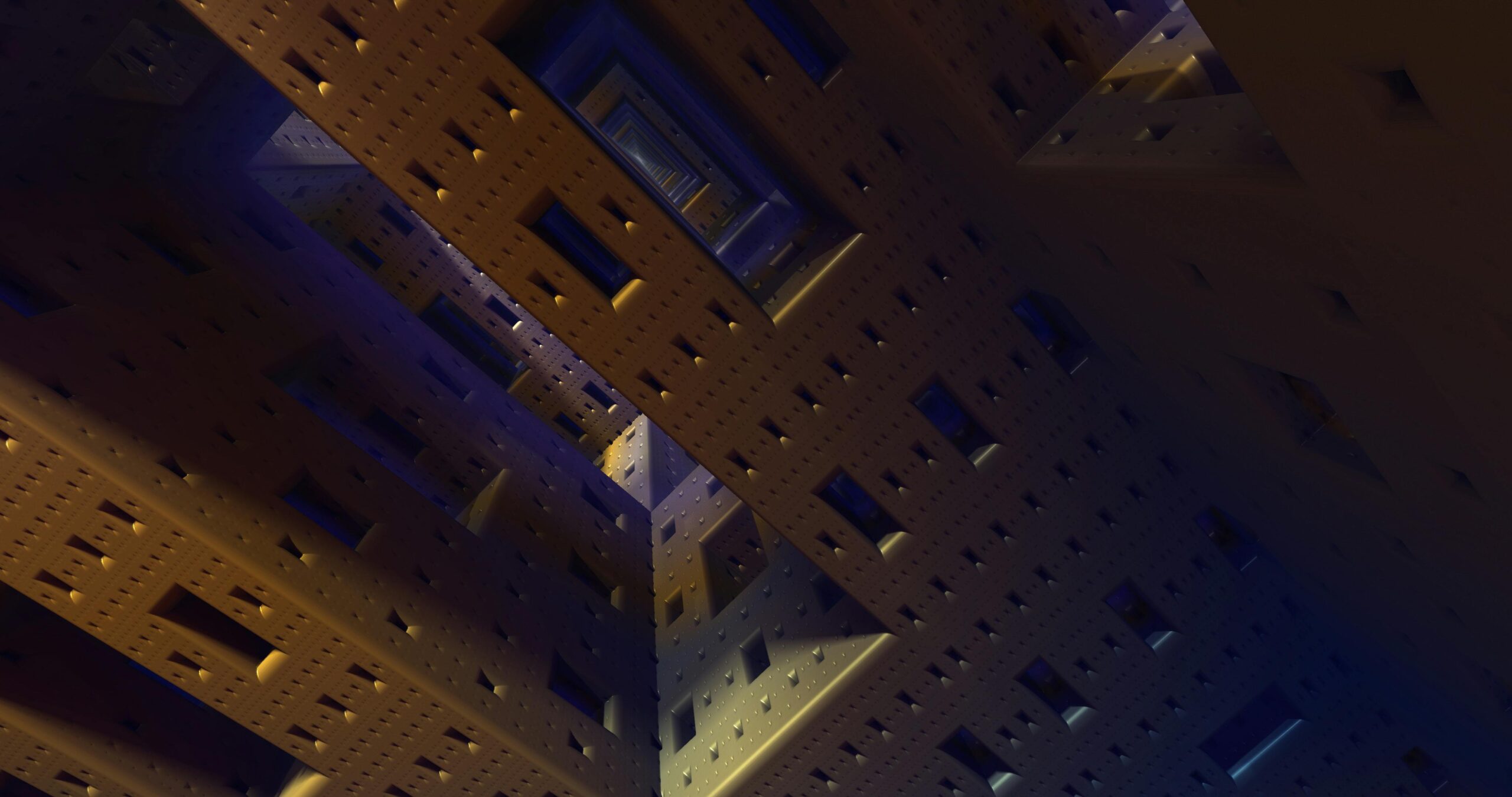
Think of fractals—the most famous examples of recursive patterns. The Mandelbrot set, Koch snowflake, and Sierpinski triangle all demonstrate how simple rules repeated infinitely create mesmerizing complexity. These mathematical constructs aren’t just abstract concepts; they’ve become foundational to modern design thinking across multiple disciplines.
The Psychology Behind Pattern Recognition
Human brains are hardwired to recognize and appreciate patterns. This evolutionary trait helped our ancestors identify food sources, predict weather patterns, and navigate environments. Recursive patterns tap into this deep psychological connection, creating designs that feel simultaneously familiar and novel.
When viewers encounter recursive designs, their brains experience a unique form of visual pleasure. The pattern’s predictability provides comfort, while its complexity maintains interest. This cognitive sweet spot explains why recursive patterns appear everywhere from architectural facades to textile designs, from brand identities to user interface elements.
Research in neuroaesthetics reveals that symmetrical and self-similar patterns activate reward centers in the brain. Designers who master recursive modeling essentially learn to speak this primal visual language, creating work that resonates on both conscious and subconscious levels.
⚙️ Essential Tools and Software for Recursive Design
Modern designers have access to powerful software that makes recursive pattern creation more accessible than ever. Traditional tools like Adobe Illustrator and Photoshop offer basic pattern-making capabilities, but specialized applications unlock the full potential of recursive modeling.
Parametric design software stands at the forefront of recursive pattern creation. Applications like Grasshopper for Rhino allow designers to establish mathematical relationships between design elements, enabling real-time adjustments that cascade through entire compositions. This node-based approach provides unprecedented control over recursive systems.
Processing, a flexible software sketchbook built on Java, empowers designers to code their own recursive algorithms. While it requires programming knowledge, Processing offers limitless creative freedom. Artists can define precisely how patterns should evolve, iterate, and respond to various inputs.
For those seeking mobile solutions, several apps bring recursive pattern generation to tablets and smartphones. These tools democratize access to complex design techniques, allowing experimentation anywhere inspiration strikes. Touch interfaces add an intuitive dimension to pattern manipulation, making recursive design feel more tactile and immediate.
Mastering the Core Techniques
Beginning your recursive pattern journey requires understanding several fundamental techniques. Each method offers distinct aesthetic possibilities and suits different design objectives.
Subdivision and Fragmentation
Subdivision involves breaking shapes into progressively smaller components. Start with a simple polygon—perhaps a square or triangle—and establish rules for how it divides. Each segment then follows the same division logic, creating intricate tessellations that maintain structural coherence.
The power of subdivision lies in the relationship between original and subdivided forms. By varying subdivision rules at different recursion levels, designers create hierarchy and visual interest. Areas of dense subdivision contrast beautifully with simpler regions, guiding viewer attention strategically.
Rotational Recursion
Rotational techniques generate patterns through systematic angular transformation. Begin with a basic element, then create copies rotated by specific degrees around a central point. Each rotated copy can spawn its own recursive children, producing spiraling, mandala-like compositions.
This technique proves particularly effective for logos, decorative elements, and ceremonial designs. The radial symmetry inherent in rotational recursion conveys balance, completeness, and harmony—qualities that resonate across cultures.
Scale-Based Iteration
Scaling recursion manipulates size relationships between pattern iterations. Each generation shrinks or grows by a consistent ratio, creating nested structures that draw the eye inward or outward. This technique produces dramatic depth perception in two-dimensional designs.
Golden ratio scaling adds mathematical elegance to recursive patterns. When each iteration scales by approximately 1.618, the resulting composition exhibits proportions that humans find inherently pleasing. This approach connects contemporary digital design with classical artistic principles spanning millennia.
🌟 Advanced Strategies for Professional Results
Moving beyond basics requires developing intuition about when and how to break recursive rules strategically. Perfect mathematical recursion can feel sterile; introducing controlled variation brings designs to life.
Asymmetric Recursion
While symmetry often defines recursive patterns, deliberate asymmetry creates dynamism and movement. By varying recursion parameters across different pattern regions, designers craft compositions that feel organic rather than mechanical. This approach mimics natural growth patterns, where environmental factors influence development.
Asymmetric recursion excels in narrative design contexts. The pattern’s evolution can suggest storytelling, with complexity increasing or decreasing to reflect conceptual themes. This technique transforms recursive patterns from mere decoration into meaningful visual communication.
Color and Texture Integration
Recursive patterns need not remain monochromatic or flat. Thoughtful color application enhances structural understanding and emotional impact. Gradients that follow recursive logic reinforce pattern flow, while contrasting colors highlight specific iterations or regions.
Texture mapping adds tactile dimensionality to recursive designs. Whether simulating physical materials like wood grain or metal or applying abstract textural treatments, this layer of complexity makes patterns feel richer and more sophisticated. The key lies in ensuring textures complement rather than overwhelm the underlying recursive structure.
Negative Space Manipulation
Advanced practitioners recognize that the spaces between pattern elements carry equal importance to the elements themselves. Recursive negative space creates visual breathing room while maintaining design coherence. This technique proves essential when working with dense recursive patterns that might otherwise feel claustrophobic.
By treating negative space as an active design component subject to its own recursive rules, you achieve remarkable figure-ground relationships. Viewers perceive multiple valid interpretations of the same pattern, enhancing engagement and memorability.
Practical Applications Across Industries
Recursive pattern modeling extends far beyond purely aesthetic applications. Numerous industries leverage these techniques to solve practical problems while maintaining visual appeal.
Architecture and Environmental Design
Contemporary architecture increasingly incorporates recursive patterning in facades, structural elements, and spatial organization. These patterns provide functional benefits—optimizing material usage, improving structural integrity, enhancing acoustics—while creating distinctive aesthetic identities.
Landscape architects apply recursive principles to create sustainable, visually engaging outdoor spaces. Fractal planting patterns maximize biodiversity while establishing coherent visual themes that scale from intimate garden corners to vast public parks.
Digital Interface Design
User interface designers employ recursive patterns for backgrounds, loading animations, and decorative elements that enhance brand identity without compromising usability. Subtle recursive textures add sophistication to digital products, differentiating them in crowded markets.
Generative design systems built on recursive principles enable dynamic interfaces that adapt to content, user preferences, or contextual factors. This approach moves beyond static design toward fluid, responsive visual experiences that feel alive.
Fashion and Textile Innovation
Fashion designers embrace recursive patterns for textiles that captivate at multiple scales. Patterns that work effectively when viewed from across a room while revealing intricate detail upon close inspection demonstrate mastery of recursive thinking.
Digital printing technology has democratized access to complex recursive textile designs previously achievable only through labor-intensive traditional methods. Designers can now iterate rapidly, testing countless variations before committing to production.
🚀 Developing Your Recursive Design Workflow
Establishing an efficient workflow transforms recursive pattern modeling from occasional experiment to reliable design methodology. Professional practitioners develop systematic approaches that balance creativity with productivity.
Begin every project by sketching fundamental concepts traditionally. Despite powerful digital tools, hand-drawn explorations often reveal possibilities that purely digital workflows miss. These sketches need not be polished—rough iterations that explore various recursive rules and parameters provide direction for subsequent digital development.
Parameterization comes next. Identify which aspects of your recursive pattern should remain constant and which should vary. Creating flexible parameter systems allows quick exploration of design variations without rebuilding patterns from scratch. This approach proves invaluable during client revisions or when adapting patterns for different contexts.
Documentation matters more than many designers realize. Recording the rules, parameters, and decisions behind successful recursive patterns creates a personal library of techniques to draw upon in future projects. Over time, this documentation becomes an invaluable resource that accelerates workflow and sparks creative connections between projects.
Common Challenges and Solutions
Even experienced designers encounter obstacles when working with recursive patterns. Understanding common pitfalls and their solutions accelerates skill development and prevents frustration.
Computational Complexity
Deep recursion levels quickly overwhelm computer processing capabilities. Patterns that look stunning at three or four iterations may become impossibly slow to render at seven or eight. Managing this limitation requires strategic thinking about where complexity truly adds value versus where it becomes gratuitous.
Solution strategies include limiting recursion depth in less critical pattern regions, optimizing geometry to reduce polygon counts, and leveraging level-of-detail techniques that simplify distant or peripheral pattern elements. Sometimes the most elegant solution involves embracing constraint as a creative parameter rather than fighting against technical limitations.
Balancing Complexity and Clarity
The infinite complexity possible through recursion can overwhelm viewers if left unchecked. Effective recursive design requires knowing when more iterations enhance impact versus when they create visual noise that obscures communication.
Establishing clear focal points within recursive compositions helps guide viewer attention. By varying recursion depth, element density, or color intensity, designers create visual hierarchy that makes complex patterns comprehensible rather than chaotic.
Maintaining Originality
As recursive pattern modeling becomes more popular, avoiding cliché grows challenging. The same mathematical principles that make recursion powerful also mean certain aesthetic territories become well-trodden.
Innovation comes through hybrid approaches that combine recursive techniques with other design methodologies. Mixing hand-drawn elements with algorithmic patterns, applying unconventional color palettes, or using recursion to generate unexpected forms rather than traditional geometric patterns helps maintain freshness.
💡 Inspiring Your Creative Evolution
Mastering recursive pattern modeling represents a journey rather than a destination. The field continually evolves as new tools emerge and designers discover novel applications. Staying inspired requires active engagement with broader creative communities and interdisciplinary exploration.
Study nature’s recursive patterns regularly. Biological forms exhibit astounding complexity achieved through relatively simple recursive growth rules. Photographing plants, analyzing geological formations, or observing weather patterns provides endless inspiration grounded in millions of years of evolutionary refinement.
Engage with mathematical art communities online and offline. Platforms showcasing generative art, algorithmic design, and mathematical visualization demonstrate cutting-edge recursive techniques while connecting you with like-minded creators. These communities often share techniques, code, and encouragement that accelerate learning.
Cross-pollination between disciplines sparks innovation. Attend lectures on topics seemingly unrelated to design—biology, physics, music theory, architecture. Recursive thinking appears across countless fields, and exposure to these diverse applications enriches your design vocabulary and suggests unexpected creative directions.
Building a Distinctive Design Voice
Technical mastery of recursive patterns represents only part of the equation. Truly exceptional work emerges when designers develop distinctive voices—recognizable approaches that reflect personal aesthetics, values, and perspectives.
Your unique design voice develops through consistent practice and reflection. Create personal projects unconstrained by client requirements or commercial considerations. These explorations reveal authentic creative interests and preferences that might remain hidden in commercial work.
Document your evolution through portfolios, blogs, or social media. Sharing work-in-progress builds accountability while inviting feedback that refines your approach. The conversation between your work and audience responses shapes artistic development in ways solitary creation cannot.
Embrace failure as essential to growth. Not every recursive experiment yields stunning results, and that’s perfectly acceptable. Failed attempts teach valuable lessons about what works, what doesn’t, and why. The path to mastery winds through countless iterations, adjustments, and occasional dead ends.
Transforming Vision Into Reality
Recursive pattern modeling offers unlimited creative potential to designers willing to explore its depths. This technique bridges analytical thinking and artistic expression, creating work that satisfies both intellectual curiosity and aesthetic appreciation. As you develop these skills, you’ll discover recursive thinking influencing how you approach all design challenges.
The journey begins with simple experiments—subdividing basic shapes, creating elementary rotational patterns, playing with scale relationships. Gradually, intuition develops about which techniques suit particular contexts and how to combine approaches for unique effects. Patience during this learning process pays dividends through increasingly sophisticated and personal work.
Remember that tools and techniques serve your creative vision rather than defining it. Whether you work primarily with cutting-edge software or prefer hands-on traditional methods informed by recursive principles, the goal remains consistent: creating meaningful, beautiful designs that resonate with audiences. Recursive pattern modeling provides a powerful framework, but your unique perspective transforms that framework into art.
As you continue developing these skills, you join a growing community of designers, artists, and creative technologists exploring the intersection of mathematics, nature, and human creativity. This field rewards curiosity, experimentation, and persistence with the ability to generate truly stunning designs that capture imagination and inspire wonder. Your creative journey through recursive pattern modeling has only just begun—embrace the infinite possibilities that await. ✨
