
Anúncios
Ancient counting systems reveal humanity’s earliest attempts to quantify the world, bridging mathematics, culture, and architecture across millennia of human civilization.
🏛️ The Dawn of Mathematical Expression in Ancient Civilizations
Anúncios
Before the digital age, before calculators, and even before written language as we know it, humans needed to count. The imperative to track livestock, measure harvests, record debts, and organize labor gave birth to some of history’s most ingenmatic counting systems. These weren’t merely mathematical tools—they were cultural artifacts that reflected the worldview, priorities, and intellectual achievements of ancient peoples.
The journey from simple tally marks scratched onto bone to sophisticated computational devices represents one of humanity’s most profound cognitive leaps. Ancient counting systems weren’t uniform; they evolved independently across different civilizations, each developing unique approaches to numerical representation and calculation.
The Abacus: Humanity’s First Portable Computer
Anúncios
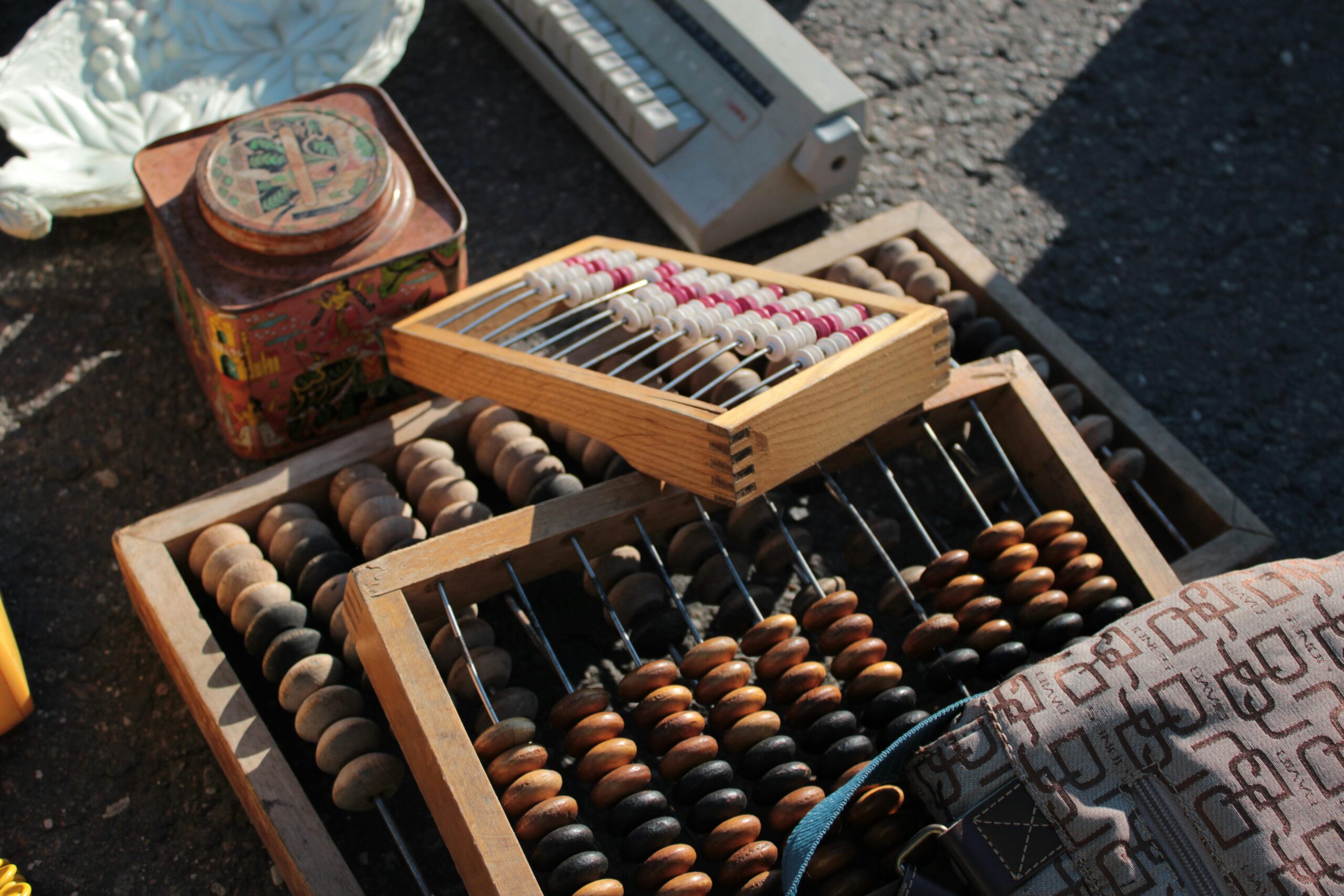
The abacus stands as perhaps the most enduring counting instrument in human history. While its exact origins remain debated, evidence suggests counting boards emerged in Mesopotamia around 2700-2300 BCE, making them contemporaries of the earliest writing systems.
The Sumerian abacus was remarkably different from the beaded frame most people envision today. Early versions consisted of columns drawn in sand or carved into clay tablets, with pebbles or tokens placed to represent different numerical values. The word “calculate” itself derives from the Latin “calculus,” meaning small stone, directly referencing this ancient practice.
Evolution Across Cultures
The Chinese suanpan, the Japanese soroban, and the Russian schoty each represent distinct evolutionary branches of the abacus family tree. The Chinese version typically features two beads above the dividing bar (representing 5 each) and five below (representing 1 each), allowing calculation in base-10 while incorporating elements of base-5 thinking.
The Japanese soroban streamlined this design, eliminating one bead from both sections to create a more efficient instrument. Expert soroban users can perform calculations with astonishing speed, often matching or exceeding electronic calculator users in basic arithmetic operations.
Mesopotamian Mathematics: Counting in the Cradle of Civilization 📜
The ancient Mesopotamians developed one of history’s most sophisticated numerical systems, employing a sexagesimal (base-60) counting method that still influences how we measure time and angles today. This system wasn’t arbitrary—it emerged from the practical needs of astronomical observation, land measurement, and commercial transactions.
The brilliance of base-60 lies in its divisibility. Unlike base-10, which divides evenly by only 2 and 5, base-60 divides cleanly by 2, 3, 4, 5, 6, 10, 12, 15, 20, and 30, making fraction calculations remarkably elegant for ancient mathematicians.
Clay Tokens and the Birth of Writing
Before cuneiform writing emerged, Mesopotamians used a sophisticated system of clay tokens to represent quantities of various goods. Archaeologists have discovered these tokens in sites dating back to 8000 BCE, predating written language by thousands of years.
Each token shape represented a specific commodity and quantity: cones for small measures of grain, spheres for larger amounts, cylinders for animals, and so forth. This three-dimensional accounting system eventually evolved into two-dimensional impressions on clay tablets—essentially, the first written records were accounting documents.
The Ziggurat Connection: Architecture as Numerical Monument
Ziggurats weren’t merely religious structures—they embodied mathematical and astronomical knowledge in architectural form. These massive stepped pyramids, characteristic of ancient Mesopotamian cities, incorporated sophisticated geometric principles and numerical symbolism into their very construction.
The Great Ziggurat of Ur, built around 2100 BCE, demonstrates remarkable mathematical precision. Its base dimensions, height ratios, and the number of terraces all reflect deliberate numerical choices tied to Mesopotamian cosmology and mathematical understanding.
Sacred Numbers in Stone
The number seven held special significance in Mesopotamian culture, appearing repeatedly in ziggurat architecture. Many ziggurats featured seven levels, corresponding to the seven celestial bodies visible to the naked eye: the Sun, Moon, Mercury, Venus, Mars, Jupiter, and Saturn. This wasn’t coincidence—it represented a conscious effort to create structures that mirrored cosmic order.
Construction of these monuments required sophisticated counting systems for measuring materials, organizing labor forces numbering in the thousands, and ensuring structural stability. The mathematical knowledge embedded in ziggurats represents applied numeracy on a grand scale.
Egyptian Numerical Wisdom: Hieroglyphs and Hieratic Numbers 🔺
Ancient Egyptian counting systems evolved through several stages, from pictographic hieroglyphs to more abstract hieratic numerals used by scribes. The Egyptian system operated in base-10 but differed fundamentally from our modern positional notation.
Egyptians used distinct symbols for powers of ten: a stroke for one, a heel bone for ten, a coil of rope for one hundred, a lotus flower for one thousand, a pointing finger for ten thousand, a tadpole for one hundred thousand, and a seated god for one million. To write a number, they simply repeated the appropriate symbols.
The Rhind Mathematical Papyrus
This remarkable document, dating to approximately 1550 BCE, provides invaluable insights into Egyptian mathematical thinking. It contains 84 problems covering arithmetic, algebra, geometry, and even proto-calculus concepts, demonstrating that ancient Egyptian mathematics was far more sophisticated than simple counting.
Egyptian scribes developed efficient methods for multiplication and division using repeated doubling, a technique that bears striking resemblance to binary operations in modern computers. They also mastered complex fraction calculations, essential for dividing rations, measuring land, and architectural planning.
Roman Numerals: The System That Refused to Die
Despite being replaced by Arabic numerals for most mathematical operations, Roman numerals persist in modern culture—on clock faces, building cornerstones, movie credits, and book chapters. This longevity speaks to both cultural inertia and certain practical advantages of the system.
The Roman system (I, V, X, L, C, D, M) employed both additive and subtractive principles. While seemingly cumbersome for complex calculations, it excelled at certain tasks, particularly tallying and keeping running totals—essential for Roman commercial and military administration.
The Roman Abacus Innovation
Romans developed their own abacus variant, featuring grooves with movable beads rather than wires. This pocket-sized device allowed merchants, tax collectors, and military quartermasters to perform calculations quickly in the field. Archaeological discoveries have revealed remarkably sophisticated Roman calculating tables with divisions for both whole numbers and fractions.
The Maya: Masters of Zero and Time ⏰
The ancient Maya independently developed one of history’s most sophisticated numerical systems, featuring positional notation and the concept of zero centuries before these ideas appeared in the Old World. Their vigesimal (base-20) system reflected their practice of counting on both fingers and toes.
Maya numerals used only three symbols: a dot for one, a bar for five, and a shell glyph for zero. By combining these in vertical columns, with position determining value, Maya mathematicians could represent enormous numbers with elegant simplicity.
Astronomical Calculations and Long Count Calendar
The Maya obsession with time cycles drove extraordinary mathematical achievements. Their Long Count calendar required tracking days across thousands of years, demanding sophisticated arithmetic capabilities. Maya astronomers calculated planetary cycles, predicted eclipses, and tracked Venus with precision that rivals modern observations.
This mathematical prowess wasn’t purely abstract—it served agricultural, religious, and political functions, determining planting seasons, ritual timing, and legitimizing royal dynasties through genealogical calculations spanning generations.
The Inca Quipu: Knotted Numerical Records 🧵
Perhaps no ancient counting system seems more alien to modern sensibilities than the Inca quipu—an assemblage of colored, knotted strings that encoded numerical and possibly linguistic information. These weren’t primitive tools but sophisticated recording devices used throughout the vast Inca Empire.
Quipus employed a decimal system, with knot position on the string indicating place value. Different knot types represented different digit values, and string color, twist direction, and attachment point all conveyed meaning. Trained quipucamayocs (quipu keepers) could read these devices to track census data, tribute obligations, military supplies, and astronomical observations.
Beyond Numbers: The Linguistic Debate
Recent research suggests quipus may have encoded more than purely numerical data. Some scholars argue they functioned as three-dimensional writing systems, recording narratives, poetry, and historical accounts. While this interpretation remains controversial, it highlights how ancient counting systems often transcended mere calculation.
Tally Sticks and Notched Bones: Humanity’s Earliest Counts
The Ishango bone, discovered in the Democratic Republic of Congo and dating to approximately 20,000 BCE, represents one of humanity’s oldest mathematical artifacts. This baboon fibula bears notches arranged in distinct patterns, suggesting deliberate counting rather than random marking.
Similar tally sticks appeared across cultures and millennia, from Paleolithic Europe to medieval England. The British Exchequer used wooden tally sticks to record debts until 1826, and their eventual burning in 1834 accidentally set fire to Parliament—a dramatic end for an ancient technology.
Cognitive Foundations: Why Humans Count
Understanding ancient counting systems requires exploring why humans possess numerical cognition at all. Research shows even infants demonstrate basic number sense, distinguishing between different quantities. This innate subitizing ability—instantly recognizing small quantities without counting—provided evolutionary advantages for tracking resources and threats.
However, exact counting beyond small numbers is culturally learned, not innate. Some isolated Amazonian tribes lack words for specific numbers beyond “one,” “two,” and “many,” demonstrating that elaborate number systems emerge from cultural needs rather than biological imperatives.
The Revolutionary Shift to Positional Notation ✨
The development of positional notation—where a digit’s position determines its value—represents one of mathematics’ most significant innovations. This concept emerged independently in Mesopotamia, among the Maya, and in India, each time revolutionizing computational capability.
The Indian-Arabic numeral system we use today synthesized earlier innovations: Indian mathematicians developed positional notation and the zero concept, which Arab scholars transmitted to Europe, eventually displacing Roman numerals for mathematical work.
Legacy and Modern Implications
Ancient counting systems aren’t merely historical curiosities—they continue influencing modern thought and technology. Computer scientists study ancient calculating methods for insights into algorithm design. The abacus remains a teaching tool for developing mental arithmetic skills and spatial reasoning.
Understanding how diverse cultures approached quantification reveals that mathematics isn’t culturally neutral. Different counting systems embody different ways of thinking about quantity, relationships, and reality itself. The Mesopotamian embrace of base-60 versus the universal human tendency toward base-10 (finger-based) counting illustrates how cultural factors shape mathematical expression.
Preserving and Decoding Ancient Mathematical Knowledge
Many ancient counting systems remain partially understood. Archaeologists continue discovering new artifacts—counting tokens, calculating tables, and numerical inscriptions—that challenge existing interpretations. The quipu, in particular, guards secrets that may never be fully decoded without a Rosetta Stone equivalent.
Digital humanities projects now employ artificial intelligence to analyze patterns in ancient numerical records, potentially revealing insights invisible to human researchers. These technological approaches may finally unlock mysteries that have persisted for millennia.
The Unbroken Thread of Human Numeracy
From notched bones to silicon chips, humanity’s quest to quantify, calculate, and comprehend numerical relationships represents a continuous intellectual tradition. Ancient counting systems laid foundations for modern mathematics, computer science, and our data-driven civilization.
The abacus user in ancient Sumer, the quipucamayoc recording Inca tribute, the Maya astronomer tracking Venus, and the modern programmer writing algorithms all participate in the same fundamental human endeavor—making sense of quantity and using numbers to understand and manipulate reality.
These ancient systems remind us that mathematical thinking flourishes across cultures, taking diverse forms while addressing universal human needs. They challenge assumptions about linear progress, demonstrating that “primitive” peoples developed sophisticated solutions to complex problems, sometimes achieving results that impress even modern experts.
As we continue advancing into an increasingly numerical age, dominated by algorithms and big data, the wisdom encoded in ancient counting systems offers perspective. They remind us that behind every equation, every calculation, lies human ingenuity—the timeless drive to count, measure, and comprehend our world.
